Tuesday, December 6, 2011

Antigua, Guatemala

This feels like cheating, but here are some pictures… from online.

Guatemalan females- women, girls, and children- from the aldeas are always seen in their traditional clothing. It’s quite beautiful!

Antigua is an old colonial town, BRIMMING with tourists.

Did I mention the volcano?

Always on the lookout for new fruit!

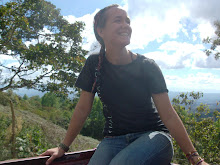
Slept in a treehouse. No big.

The Earth Lodge is wonderful, with incredible views. And considering that it's avocado season and we're on an avocado farm, we've been eating lots of them! We even tried avocado ice cream!

Friday, November 25, 2011

I just met a new first-year student for next year, about 12 years old, bright-eyed, in awe at everything at the Center, alongside Sister Teresa receiving the grand tour. The young girl explained to me with confidence that she wants to study so that she can defend women's rights. Day made. I know that she will flourish here and am so proud of the Center for being able to give her the opportunity to continue studying. Not only that, but seeing how proud and excited Sister Teresa was in hearing her aspirations gives me hope for these students because they have someone that believes in them.

Today's my last day at the Center and as much as it breaks my heart to know that I won't be able to get to know these lovely young girls who are bound to grow in beautiful ways here, I have hope and faith in what the Center sets out to do.

Friday, November 18, 2011

L'Arche

Ever since I was younger I’ve always been intrigued by people with developmental disabilities. In fourth grade I remember the curiosity I had for my classmate who had a special tutor, and felt comfort in his friendship. From then on I found myself with different opportunities, always learning more about people with disabilities. So last year when I read about Jean Vanier and learned about the L’Arche communities that he formed in the 60’s, I was moved by his vision.

L’Arche was originally created as an alternative for institutionalization, which many years ago went hand in hand with human rights violations. Today the international organization creates permanent residencies- loving homes- for abandoned persons with disabilities. The values of L’Arche are quite beautiful, based on values of community, respect of the individual, developing one’s gifts, and strengthening one’s spirituality.

Knowing that there are two communities in Honduras, I was interested in seeing the strengths and weaknesses of a community in a developing country. In my past months I’ve found a strong sense of community in the face of poverty, so being able to experience an intentional community in the context of an impoverished country was exciting- for me, two things that go hand-in-hand. So on Saturday I ventured to Tegucigalpa, taking my first rapidito out of Guaimaca. I arrived later that morning to a community in Aldea Suyapa, in a house overlooking the city. (And of course being there, the community life felt natural. I asked one woman for how many years she had been with L'Arche. She looked at me and said- I don't know... this is my home.) When I arrived to Casa Nazareth, one of two houses in Tegucigalpa, I was warmly welcomed by its seven residents. The weekend was slow and gave me a good opportunity to learn how the organization’s values were lived out on a daily basis.

Weekdays are spent at the workshop, making different things for the store. Men are in charge of sanding mop handles and women make various crafts.

Before each meal, to start every work day, and every Monday night is prayer time. It was humbling to be part of their prayer services because they were so simply joyful. One woman led us in song with all of her strength (her face was strained the entire time) and complained of a headache afterwards. They just didn’t hold back.

Throughout my entire visit I was a bit frustrated with my inability to communicate. You would think after a year of living surrounded by Spanish speakers that I would’ve learned some more patience. A couple of the residents are unable to speak and rely mostly on gestures or grunts. It made me thankful for my understanding of Spanish and appreciative of other volunteers’ patience in learning Spanish. It also made me think back to my time at Harriman Lodge (a summer camp for adults with disabilities) where I met a man who relied on using a communication box. He told me of a time before he used the device when his caretakers plopped him in front of the tv when he wanted to be doing other things. He ended up writing a book and was on a news program for his efforts. Without that technology he was stuck in a world of frustration and misunderstanding. While this woman at L’Arche is cared for, I wish that she was able to feel that she could express herself more freely and that I could understand her. But despite the barrier, we connected and she shared her joy with me.


Another surprise, but inevitable due to the lack of resources, was that none of the staff (including the director) had received any kind of formal training for their work. They rely mostly on learning from their own experiences and from their co-workers. In fact, they were a bit surprised when I asked if any sort of pre-requisites were required. In the States we’re all about qualifications, certificates, titles. The director shared that they struggle to find willing people to dedicate their lives to L’Arche, so it makes it nearly impossible to find educated persons. (In reality, this goes back to Honduras’ larger problem: lack of a solid educational system that can empower its students to help to rejuvenate the country and a basic value for quality education.)

Something that I’ve frequently observed throughout the year is acceptance. It is an empowering notion when a person is accepted for who they are, but when there’s no reflection, development, challenge, to offer the best of what you have, then acceptance becomes stagnant. In L’Arche they lacked the development of the individual’s gifts. It may have been hard for me to see in my short stay, but it seemed like the community needed more intentionality and guidance.

But while the house lacks a lot of resources, it does offer a lot of love and a dignified life to its members. And I certainly learned a lot. It was a pleasure to have been able to experience L’Arche as I did and to remember the gift of people with disabilities and the simple ways that they can transform others’ lives.

And being away always makes me thankful to return to a loving community, where I was greeted with familiar faces. Just over a week until Chris and I begin our travels to El Salvador and then Guatemala!

Saturday, November 12, 2011

First, I apologize for not having blogged recently. The past few months have been busy, but life here has felt even more like my life, much more than just a really long service trip- making it feel strange to blog about.
Eventually I’d like to share some reflections about my personal growth, what the year has meant to me, etc. But for now, just a few updates:

Two weeks ago was the final closura, similar to a graduation or promotion ceremony. Special students were awarded for their honorable behavior and one was granted a scholarship to continue studying at the Center. It was a nice way for us to congratulate the students for their hard work and acknowledge the value of their education. The bachillerato students danced and we watched a picture slideshow of the year’s events. I thought that the day would’ve been more emotional for me- it wasn’t easy to say goodbye to the students but I was comforted by the memories we shared and the growth I’ve had, thanks to them.

Two of my 8th grade English students were required to take their second re-take (after failing the first two tests at the end of the second semester). We had the entire semester once a week and then a full week before the second retake to review the material from the entire semester. They both worked hard but in the end only one of the students passed; the other failed. For the Center, unfortunately, that means that she won’t be able to return to the Center. If she wants to continue studying she has to repeat the grade and travel every day to and from her aldea to Guaimaca.

I wasn’t able to attend the service, but there was a neat ceremony for All Souls Day last week. There were a lot of flowers being sold around town for families to decorate the tombs in the two cemeteries. I wish I could’ve seen it because I’m sure it was decorated beautifully, but it seemed pretty common to go with family to visit the deceased. In mass that night there was a special remembrance of those passed- parishioners that bought a candle were called to light it and put it on the altar. Each name was called and by the end the entire altar was covered in shining candles. It was a symbolic way to remember that the memory and spirit of those passed still live among us.

Last weekend Matt and I traveled to El Destino, to visit Digna and her family. We arrived and were put to work making the day’s tortillas- we finally got it down. Her and her sister were giddy to show us their pictures, sometimes running away laughing of embarrassment. At the end of the day I gave Digna a wooden heart that my mom had sent down for Valentine’s Day. I normally don’t re-gift, but it felt appropriate- in more than just a symbolic way was the heart passed on. From the love that I received from my mother is what has helped me to have such an open heart to Digna and to care for her in such a special way. And now I will look for the next place to carry the love that I found with Digna- and I know that she will do the same. We live in each other now.

This week has been a lot of repairs, cleaning, and organization around the Center. Matt will be leaving next week, so we've had a lot of last dinners with friends and co-workers. I'm so inspired by the number of people that are dedicated to the Mission and the support that we've received from them throughout the year. 

On Saturday I’ll be going to Tegucigalpa for a few days to visit the L’Arche community there. I’ll try to update when I’m back because I have no idea what to expect! (Check out Jean Vanier if you want some good readings on community.)

Chris and I will be traveling for the last bit of our time before we head home. The rough plan is to travel to El Salvador to visit Oscar Romero’s chapel and tomb, then Guatemala to chill on an avocado farm/eco-lodge. I am looking forward to the opportunity, not only to soak in more of Central America, but to have time to reflect, between leaving Guaimaca and arriving in the States. 

Wednesday, September 7, 2011

The simple things

So this is kind of jumbled and a little outdated- it was meant for two weeks ago (I’m sorry I have been slacking!):
This past weekend was absolutely wonderful. One of my students, Digna, from Primero Ciclo was staying in town with her sister instead of traveling back to her aldea, so I had the opportunity to hang out with her outside of the school day. She’s such a special person and I’m glad to have gotten to know her better over the past several weeks. Being one of the smallest and youngest students also makes her one of the cutest. With her huge smile and big brown eyes, she always knows how to make my day. Recently she’s been coming up to me and saying “hug me” and in a way that isn’t demanding or selfish. (Of course I can't say no!) In class she isn’t the most vocal, but is one of the most studious and responsible. When I asked the students to draw a picture representative of the Center, most drew flowers or maps. But Digna drew a star. When I asked her to explain what it meant for her, she explained what a great opportunity she has and that the Center itself is a shining star. I’m most impressed by her consistent mood: she always seems light-hearted, attentive to others, and genuinely happy. I’ve never felt inspired by a thirteen year old before until I met Digna.
On Saturday we went out and ate ice cream in the park and talked mostly about school happenings, but it was nice to share that time with her. On Sunday we went to morning mass together and then came back to the house to eat Matt’s delicious bagels and play cards.
Saturday night was the town carnival, complete with a parade of the Guaimacan queens, giant puppets, and dangerously close fireworks. We ran into a few students and they asked us to go on the Ferris wheel with them. It was fun until some of the lights went out and the guys in charge were fumbling around the mechanical box. But we made it off safe, if not just a little dizzy.
 After mass on Sunday the three of us biked out of town to visit another of my students, Suamy. She and her family live in the middle of an open field on the main road, with lots of fruit trees and corn surrounding their house. It was a nice change of pace from the metal fence and barbed wire in our own front yard. After feeding us grilled corn and tamales, we headed out to visit a park and brook. The park was empty but scattered with benches and even a grill. It was refreshing to be surrounded by pine trees and the fresh breeze. We then headed to the stream where we caught a handful of little fish and a tadpole (sadly, none of which are still alive..) Further downstream was a place to swim. We started hesitantly with just our shoes off and pants rolled up but eventually jumped right in, clothes and all. The day reminded me of the simple pleasures, and I was thankful to be able to share a special place with Suamy. When we returned to her home her mother had more food cooked for us, another sweet corn concoction. Her father brought Matt around to show off the pride for his land while Chris and I got our butts kicked in soccer (even though it was two against one). 
On Friday we went out to dinner with Kenya, Denis, and Daniela, their daughter. They’re a lovely family and have shared their friendship with us over the past few months. We went to a new Mexican restaurant that opened up right down the street which has good food and a tranquilo environment. Denis excitedly shared his experiences with us after he has changed work, from teaching physical education classes to driving trucks with his brother... mostly in reference to the huge plates of food that he gets to eat while on the road.
Like I said, it was a really great weekend and reminded me how much I enjoy life here, being able to spend quality time with people that I care about.

Monday, August 15, 2011

Dia de Lempira


(This was meant to be posted last month!)

July 20 is a national holiday in Honduras, dedicated to Lempira. He was a Lencan that fought against the Spaniards after their invasion.

For weeks the girls have been planning for today’s Indio Bonito contest. They voted on someone to represent their group (most commonly the person who looks most like an indigenous). Each grade made their own dress, made with natural things from their aldeas. They brought coconuts, seeds, leaves, and tree bark to make dresses, headdresses, sandals, and jewelry.

They put a lot of time and creativity into their dresses-the juniors had a colorful map of Honduras made of rice, and the chiquitas had the national seal put together with colored rice! It was quite impressive.
Today they dressed, modeled, shared about their dresses and about Lempira and what it meant for them to be representing a national hero.

There was a panel of adults from outside the school that chose the winner. After the modeling and speeches they chose Lilian from II Bachillerato, a senior. Last year’s Indio Bonito, Lilian's sister, proudly presented the sash. 

There were two skits, the first of a Honduran legend, La Sucia. They say that when men go out by the rivers on their way home the Sucia comes out. At first she’s a beautiful woman, just washing her clothes. Then she turns into an ugly witch and steals the man away. It was humorous watching the students chase each other around but leaves an interesting message.. And the second skit was the death of Lempira. A group of girls did a traditional dance as well.

Then we were invited to try traditional food. Each grade had prepared something different. There were baleadas (flour tortillas with beans and cheese-a simple but delicious snack), catrachas (fried tortilla with beans and cheese), tamales (ground corn with beans, cooked in a banana leaf), pastelitos (similar to empanadas but these were filled with pineapple), sweetened papaya, rosquillas with honey (a hard, bitter cookie), and a corn drink with lime and sugar. Most of it was food that we’ve had here before, but it was lovely sharing a meal with the girls that they worked together to make.

Fanny made sure that we norteamericanos- who didn’t have the slightest idea of what was going on- were dressed in traditional clothing. The girls from Primero Ciclo had decorated something for me to wear around my shoulders and all the female tutors wore long, colorful skirts.

During the day there were a couple parades of school children walking by the Center, all dressed up. They were adorable in traditional dance clothes and dressed as indigenous. 

Overall it was a very special day for the girls and a great opportunity to share in the culture with them and see their pride in their roots. 

Tuesday, July 12, 2011

Hora Santa

I’ve realized how little I’ve shared some of my personal reflections, so here goes.

Almost every night of the week I accompany the students to a service at St. Rosa de Lima, the Catholic Church in town. Over the last five months I’ve spent a lot of time in the pews there, reflecting, listening, and praying. Last year when I was accepted into this program, I was uncertain about how the very present religious life of the mission would change me. In fact, it was one of my biggest hesitancies. In college I wasn’t much of a church-goer, and put my spirituality on the back burner. Yet, I was confident that I would be able to continue to be a role model for the students. I have always believed strongly in the love and dedication to justice that is deeply rooted in the Catholic faith.

Every Thursday is Holy Hour, something that I don’t always look forward to. Normally it’s a challenge to stay focused for such a long time and be present. But tonight was different.

From the very beginning of Holy Hour I felt open to the strong feelings of love and faith. Praying before Christ on the altar was ever powerful. During the Easter season and up until a few weeks ago the crucifix hanging over the altar had been covered with a tapestry. Tonight the crucifix served as just another reminder of the never-ending love and sacrifice of Christ. Rigo, a friend and the person directing the prayer, reminded us to give all of ourselves to God.

I thought of the last five months and how much I’ve grown and come to enjoy the scripture and its messages. I thought of the past week, of the little acts of kindness that I had witnessed and the love that I feel each time I enter the Center. I thought of everything that I’m thankful for, here in Guaimaca and in the States.
I’ve always felt a strong connection with the Holy Spirit, but lacked such with the Holy Trinity. Last month I read Pope John Paul’s reflections on the Eucharist, gaining insight to what that sacrament means for the priests. It helped me to recognize and further develop my own beliefs. This night deepend that insight and understanding even further. I could feel God present in those around me and felt honored to be a part of the Adoration.

In the middle of one of the times of silent prayer, the chorus started singing a song called Los Angeles de Dios:

Hay angeles  presentes en este lugar
En medio del pueblo en junto al altar
Subiendo y bajando en todas las direcciones
No sé si la iglesia subió o si el cielo bajó
Si sé que está lleno de angeles de Dios
Porque el mismo Dios está aqui.

My mom had brought a cd of Spanish music with her when she visited last week with my dad and brother. In her down time at the Center she played this song on repeat, trying to learn the words in Spanish. Needless to say, it was stuck in my head for the entire week and as much as I disliked it, I found myself singing along.

When it was sung tonight, the first time that I’ve heard it at our church, it was absolutely beautiful. I could feel the energy and strength in the voices of those singing along. But mostly I was so moved by the fact that it was being sung, after my mom had shared how much the song meant to her. I couldn’t help but see it as somewhat of a sign. It felt like her love and faith that she has shared with me for the past 22 years was there with me, continuing to guide me and my faith. (Cue lots of messy crying.) I know that I will look back on this moment as a turning point, and can feel how something has changed within me. 

Sunday, June 12, 2011

The northern coast


This last week was semana de los estudiantes, which meant our second vacation. After almost eleven hours of travel, we reached the northern coast. MaryAnne from Stonehill´s Campus Ministry was kind enough to connect us with Andrea, a friend living in La Ceiba. There we were graciously welcomed by her and her family. She is a director of Finca del Niño, an orphanage three hours outside of La Ceiba. The next morning we headed there to see what the mission was like.

We stayed in the house which homes about twenty volunteers, all with different roles around the Farm. Some were teachers, others psychologists or social workers, and some managed the food supply. They all agreed to a two and a half year commitment, living in community, and supporting the mission. It was really great to see how a larger community functions (coming from one of just three people). The experience also bettered my ability to see the strengths and weaknesses of our community.

The Finca had beautiful grounds, and was right on the ocean (which I certainly enjoyed)! It´s an all-in-one deal with a school and a clinic right within their walls. The children from the surrounding aldeas also attended the school, along with the thirty or so orphans. It had a neat living arrangement, with parental figures and a houseful of kids organized by age and gender.

Before leaving, we decided to check out a zip lining place. We found out that one of the owners and one of our guides was a Congressman, that this was his side project while he wasn´t working. The place hadn´t opened to the public yet, but it was recommended so we took our chances. And boy, did we. We went zipping through the woods, past palm trees and mangroves. Each time that we climbed the tower to zip off of, it swayed and some of the zip lines weren´t adjusted correctly… so everyone had to turn around and pull themselves in to the end. By the end of our round, we had the option to continue on a zip line over the water. But only Chris decided to go while Matt and I watched some fishermen on the river. Chris came back a while later, soaked! For starters, one of the adventure bridges was a little wacky. He ended up crawling, with his security cord right by his side instead of safely taut above him. Then when they got to the last zip line, the one that ends on the dock, it was way too loose. Two of them ended up having to crawl backwards along the line, pulling themselves to the end (while being pelted with waves coming in!). The Congressman stopped midway and had some of his friends on the beach bring over a ladder so that he could get down! I wish I could´ve seen the spectacle, but I´m just glad that I decided not to go.

Fortunately, the Congressman gave us a ride an hour to a midway point to catch our next bus. Unfortunately, however, we missed the bus, then realized that the town we were in wasn´t even mentioned in our guide books. We relied on the kindness of a store owner who drove us to a Hotel California (a couple days after Matt swearing that he would never for the life of him stay in a hotel with such a name).

Before we got to the hotel we were approached by a man at the bus stop. He was really excited to share his story with us, and I was just as willing to listen. He was on his way to the capital to protest and to fight for the rights of his fellow farmers. He told us about his compañeros that were recently killed for protesting. He had some interesting insight to Honduran culture- he was upset with Zelaya that he doesn´t share his wealth like he promises- and it shows their expectations to care for each other, especially their government. In that area there are a good number of larger corporations Dole (who plays a historical role in the development of the city), and a handful of palm oil companies. Apparently the owner of one of the palm oil companies is also a huge drug dealer as well. The land to the east is pretty undeveloped and is known for being home to drug producers. So this man was hoping that we could spread the word, so if you want to check it out, he was part of the Movimiento Unificado Campesino de Honduras.

The next morning we headed back to La Ceiba, to visit the Finca´s apartments for the teenagers once they´re in Bachillerato. It was a neat set-up and they were extremely hospitable. We walked around town, peeked in an art gallery, scoured a bookstore, and spent some time on the beach (with a dead dog and a few sewage pipes being pumped into the ocean…).

The next day we traveled an hour to the Pico Bonito National Park for a hike to a waterfall. We stumbled upon a really neat art collective that supports environmental efforts, using recycled materials for their work. It was mostly youth and seemed like a neat hang out for them. I wish that our students had opportunities like this to express themselves and socialize with other youth from town. It´s also refreshing to see youth who are spreading environmental awareness and not just value the earth´s beauty but act to protect it.

Also went to Sambo Creek, a Garifuna village outside of Ceiba. There wasn´t much going on, but there was a beautiful beach (with some nakie boys that were intent on playing with us) good seafood for the guys, and a bit of an insight to the Garifuna culture. Back in Trujillo we had the opportunity to go to a Garifuna mass where they danced, sang and clapped to the drums, and spoke in their native tongue.

It was a very nice trip and we got to see a good part of the northern coast, but as always, it´s lovely coming home. When we met Denis at the bus station, a friendly face from the parish, I was even more excited to head home and continue our life here.

I´m a bit nervous about classes coming up. Aside from not speaking Spanish for the past week, it´s been pretty stressful recently with my new schedule. I have two tutoring sessions (one with Sister Gloribel and the other with Manuel), English for 7th, 8th, and 10th grades, Spanish review for 10th and 11th, Study Techniques for 7th, 8th, and 9th, two gym classes, on top of the spiritual activities at night and tutoring sometimes until 9:00. So needless to say, it´s quite a work load.

This week is Tori´s departure, a retreat, a second psychologist visit, a dental group from UCLA at the medical center, and Kris is coming on Saturday…lots going on! And 15 days until Mom, Dad, and Mitch visit!! :)

Wednesday, May 25, 2011

Graduation

Last night I had the pleasure of graduating at el Centro Marie Poussepin.

As most of you know (for those who don´t), I graduated a semester early and finished my undergrad in December. This past Sunday was Stonehill´s Class of 2011 commencement ceremony. Since I´m here in Honduras, I was unable to attend with the rest of my classmates and good friends. It was difficult to be so far away and disconnected from it all.

The weekend passed as normal, and I wasn´t expecting any sort of celebration. I was able to have a family party before I left, so I felt that my graduation was behind me. Last week we were told that we would be celebrating Sister Teresa´s birthday but that it was a surprise.

So at 6:30 the bell rang and everyone gathered under the mango tree. I went prepared with my card for Sister Teresa, signed by all of the tutors. Matt called everyone´s attention and then turned to me and told me to go change. Andrea guided me into the back room to put on a graduation cap and gown. After trying to collect myself from such a surprise and stop laughing/crying, I came out to find the girls lined up, creating a pathway leading to the gazebo. Some students were decked out with confetti and bubbles for when I passed by. When I finally reached the gazebo, it was lit up in glow sticks that said Bienvenida. The lights turned on and it was decorated with Felicidades and in Stonehill´s purple and white.

Everyone gathered in and Sister Teresa said a few words and said a blessing. Then Andrea and Matt both spoke. I was really moved by what Matt shared with everyone present. It was an excellent opportunity to reach out to the students, to show them the connection between education and personal development, that schooling is more than just memorizing from books. He talked about the values that each of us had learned from Stonehill and are now sharing our gifts with the students. I hope that they were able to take something away from what he said, to value an accomplishment such as a graduation, and to be motivated to complete their studies. Chris then made it official by handing me my diploma, which was artfully crafted by Matt and Andrea. It seems pretty legitimate, even signed by Sister Teresa and Father Craig.

As if that wasn´t enough of a surprise, Sister Teresa had thought the whole time that the celebration was just for my graduation! So then the board was turned around, changing it from a graduation hat to party balloons. Everyone sang and laughed as Sister reacted, quite surprised. II Bachillerato sang a song for each of us, about endings and new beginnings, I Ciclo danced, and the rest of the grades had made quite beautiful cards.

I was asked to share my words with them before we ate the ice cream that was to come. I was still so overwhelmed that I didn´t have many words. But I mainly shared that although I was far away from my family
and friends, I was glad to be celebrating with my family here.

Then the dancing started. The girls normally have an hour of silent
study time, but instead the Sister let them dance until bedtime! They
seemed to have a nice time, and it was good to see them have fun and
relax.

Matt and Andrea had been working over the weekend and all day Monday on decorating and organizing everything. It was a really nice thing to do for Sister and I. (I even found my tassle from my cap tied onto my bike this morning.) It was such a nice night. As Andrea was guiding me in back to put on the cap and gown, she said- this will be a graduation you´ll never forget. And boy, was she right.

Sunday, May 22, 2011

Felicidades!

Congratulations to Stonehill´s Class of 2011!

I hope that you all have enjoyed Cape Week and the other senior celebrations. : )  I miss you dear friends and will be thinking of you today as you take the next step in your journeys!

Saturday, May 21, 2011

Guaimaca

Our small town of Guaimaca is just under two hours outside of the capital, Tegucigalpa. The city itself is only about 12,900 or so. With its13 aldeas, the population comes to about 20,000. (stats thanks to Wikipedia)

The center of town is built around the Catholic church and the park. Sometimes on weekends I´ll bring a book or my journel and find an empty park bench under a shady tree. There´s always a lot of action in the park during the day- people from the aldeas with their pickup trucks selling produce, people waiting for buses, or just sitting and chatting with friends. Surrounding the park you´ll also find a bank, ice cream shop, and some corner stores. About a block away is the main market, where we buy the fruits and veggies  that the farm doesn´t produce. The supermarket that we frequent is just a couple blocks from there, and it´s one of the few where you can walk up and down the isles. With the others, you have to order at the counter. There are a lot of things that we´re used to having easy access to (olive oil, chocolate chips, brown sugar, just to name a few) that we aren´t able to find here in town and can only be bought on trips to the capital.

From the house to the Center is about a five minute bike ride (we each bought our own bikes to get around town. mine is even decked out with a handydandy basket!). By now I´ve memorized the potholes, manholes, and speedbumps (believe me, there are a lot of these obstacles) on our route. I´ve also grown accustomed to saying goodbye to our neighbors when they´re out, seeing the man outside sweeping in front of his shop, and greeting the banana lady outside her pulperia.

On almost any street you´ll find lots of people walking or riding bikes, stray dogs, garbage (and the all-to-common pile of burning garbage), and trees loaded with mangos, plantains, or coconuts.

The house on a quiet dirt road right off of the main road. (Every now and then a pair of horses or an entire herd of cows pass by our house. Matt and I have tried to feed them some carrots, but they wouldn´t come near us.) It´s a place that I´ve certainly come to call home over the past four months. Since we´ve arrived, we´ve been able to add homey touches here and there. We´ve added a comfy hammock on the side porch that we and the neighborhood kids enjoy, added to the varied book collection, collected different games (including Risk!), hung our house covenant on the wall, and plastered our rooms with cards and notes from home. We even have our own collection of recipes (that our temperamental oven sometimes destroys) from our families and neighbors.

In our side yard we have our own mango tree and lime tree. I´ve really enjoyed watching the fruit grow and ripen. The mango tree was in bloom when we arrived and the mangos are just ripening now. We´ve made some delish mango salsa, mango marmalade, and mango smoothies. It´s glorious being able to snack on fresh mangos off the tree. The neighbors frequently ring our doorbell just to ask for mangos-they´re that good.

In back we have a pila which serves as our washing machine. It´s hard to describe, but it´s basically a cement contraption that holds our water, with an area to scrub our clothes on a ribbed surface. It´s a lot more work that throwing clothes into the washing machine, but I enjoy the therapeutic qualities of its labor.

Luckily we are able to compost our food scraps, thanks to our connection with the farm. They have a large-scale compost system that we add to, ending up as organic fertilizer.

The water in the house isn´t potable, so we take water from the wells at the Center (which have been tested to be clean). Most families in town are forced to buy their drinking and cooking water.. for those that can afford it.

The rainy season has certainly arrived. We´ve had several storms in the past two weeks, accompanied by strong winds, thunder and lightning. Yesterday I sat on our front porch to journal and watch the storm and also saw our neighbor´s roof of their shed get ripped off. I can´t imagine how many homes are flooded or damaged. And at the farm a good number of crops were killed by the acid rain. We´re pretty lucky with only a few leaks around the house.

I hope that gives some insight to my lovely house and hometown. And I´ll try to be better about updating in the future! :)

Tuesday, April 26, 2011

Felices Pascuas

Easter is not only an important week for the Church, it´s quite busy! I didn´t expect to be spending so much time at church, but was happy to be part of the Easter celebrations. Thursday night I went to mass where Father Craig washed the feet of several parishioners. Friday morning was Via Cruces, the re-enactment of the Passion. We processed through the town, following the youth of the parish who were dramatizing the Stations of the Cross. At each station there was an alfombra, an image made out of dyed sawdust. Each image was distinct and went with the station. They were also varying in size-one was big enough to cover the width of the front of the church!

On Friday I took part in two other processions through the streets. The first was led by a group of men carrying a glass casket decorated with flowers that held a statue of Jesus. We walked from the church to a cemetary, singing and praying along the way. The second procession was later Friday night, and traditionally only women were allowed to go. It´s meant to be a time to accompany Mary in her suffering, so we said the rosary and stopped at a few altars along the way. It was touching to see how many people were involved and willing to set up an altar in front of their home.

On Saturday night I went to the fire blessing, held a block down from our house. It started with a blessing of the Easter candle. After lighting the candle, we each lit our own individual candles and then processed through the streets to the church. When we arrived, the church was left in darkness, but lit up only by our individual candles. It was quite moving to see the symbolism, that each of us carries the light of Christ and in the end, people are what give life to the church. We listened to a few readings from the Old Testament while in the dark and then the lights went on, we sang, and listened to readings from the New Testament (at least I think that´s what was happening). It was a nice ceremony, and a beautiful way to welcome Easter day.

On Easter we went to mass in the morning, with the church decked out in green and white. When we went home, we did a treasure hunt! Tori had put clues throughout the house that led us to an Easter basket hid in the mango tree. She made us each a cross-shaped cookie accompanied by a mango bunny. (My favorite clue was: I´m a very expensive paperweight. It ended up being my crap computer. Haha) I was excited that we were able to have our own kind of Easter celebration, and one that reminded us of home. It was hard being away, but we were kindly invited to dinner at Father Craig´s with the Sisters. It certainly wasn´t the same as home (or Gram´s cooking), but was very nice to share the meal and holiday with such good company.

Overall, it was a lovely holiday. Towards the end of our break, I wasn´t sure how I felt about going back to school. It was nice to have time to ourselves and relax, and I was getting a bit spoiled. But over the weekend I saw a couple students and was filled with joy. I was so excited to see them both. It reassured me that I was ready to tackle another trimester with the students.

Every trimester we change classes, so after this review week and tests next week, we´ll be starting fresh. We won´t find out our exact assignments until tomorrow, but the main classes are English, Math, Psychology, and Economics. I´m looking forward to teaching something that I know well, instead of material that I have to learn first and then teach (like Spanish grammar or an analysis of a Honduran legend).

Hopefully I¨ll be able to post some pictures of the trip and of Semana Santa, but don´t hold your breath!

¡Nuestro Primero Viaje! Our First Trip!

This past week was Semana Santa (Holy Week), an important time of year for the Church. Pretty much everything shuts down that week and everyone heads to the beach or nearest swimming hole. My housemates and I travelled to San Pedro Sula (the industrial capital) for a night and to Copán Ruinas for three nights. In San Pedro we were lucky enough to meet up with one of the psychologists that we met the previous week. She brought us to some neat places in the city including a cultural museum and a fast food chicken restaurant that she was very proud of (I really threw them off when I ordered rice and beans without one of the fifty different chicken options).

Then we headed to Copán, home of Hondura´s only site of Mayan ruins. It was a pretty touristy town and a lot safer than what I´ve been used to in Guaimaca. So just getting away on its own was a bit liberating. I enjoyed venturing through the cobblestone roads, visiting a photo exhibit, and even just sitting and reading in the central park. The ruins were pretty interesting. We were able to climb up the steps of the temples and touch sacrificing stones (equipped with slots to let the blood of the sacrificed run down). I also went on a really beautiful nature walk and saw some truly grand trees. I do wish that I had put down the money for a guide, but it just wasn´t in our budget. There wasn´t much information out along the paths, but it was still neat to witness the grandiosity of a civilization that flourished so many years ago.

The next day we ventured to Macaw Mountain. It is a bird park that accepts birds from captivity. From there, they breed them and set the youngins out into the wild. It´s mostly an educational park and it afforded us the opportunity to get up close with the birds native to Honduras. They were quite brilliant.

Possibly the best part of our trip was stumbling upon a small brewery run by a German man on the outskirts of town. Let me explain my excitement. Since our first month here, I realized that one of the things that I would miss most (talking food-wise) is good quality beer. Honduras has about three options, and they’re all watered down… the best of all being Corona. So sitting down at this brewery, being able to truly enjoy a cold wheat beer was marvellous. So this German man had settled in Copán fourteen years ago and now has a family and his own brewery. He was so passionate about his work that he gladly showed us the brewing process and his equipment. It was quite neat.

We returned Wednesday night of Holy Week so that we could be back for the Easter services. Coming back to Guaimaca made it feel even more like home…even though the electricity had gone out. 

Monday, April 4, 2011

La Resistencia

There has been unrest among Honduras’ educational system for decades now. Teachers unions are almost always on strike. Students are supposed to attend something like 240 days of schooling per year, but with all of the days off (thanks to the strikes), they spend about half that in the classroom. It’s no longer surprising for me to hear our neighbor’s excitement because she can stay home from school. There haven’t been classes for the past three weeks, and there’s talk of the students missing the majority of the year.

The teachers who are a part of the Resistencia are on strike for an increase in salary. That said, some believe that the teachers are just out for money (since they already get a decent salary).  There are a number of teachers that weren’t paid for all of last year because of budget shortages. Others blame the oppressive system/government. If teachers aren’t receiving the support that they need, then they should be speaking up and demanding better conditions for themselves. It's hard to tell what's really going on when everyone has their own opinion (including the newspapers that are owned by influential families).  

But it’s not that simple. There is a lot of political rage behind all this: ever since the coup d’état (when Zelaya was removed from office in 09), the Zelayistas have spoken up.  This past week in Tegucigalpa there was a busload of teachers loaded with rocks, throwing them at passersby.

There’s talk of the country wiping the teaching staff clean, suspending classes for six months, and completely rehiring. Apparently there are a lot of certified teachers available to replace the current staffing. President Lobo threatens that if classes don’t resume this week, then teachers will start to be fired. We’ll see what really happens.

What better way to oppress a country than to destroy educational services?

Even within the universities there is a lot of corruption among admissions and content. If you’re well connected, it doesn’t matter what you score on the entrance exam (or if you take it at all). And if you’re not connected, you’re out of luck: you might have to take the test several times.

There’s no way to improve the quality of the students’ education if the teachers are only available for half of the year and aren’t receiving the support that they need. There’s no investment in the youth. (For this, among other reasons, I really appreciate everything that the sisters are doing at the Center. Life continues as normal, regardless of the political situation.) 

Educacion en Honduras

The country requires that each student receives an education up until 6th grade. That said, Honduras has had some of the lowest rates of access to education in all of Central America. For those that do have access, education may mean a one room schoolhouse, equipped with one teacher for all six grades. Books are a rarity, so class time is mostly spent copying the teacher’s book or information from the board (just another example of how memorizing is engrained in their educational structures).

When I started teaching the 22 seventh-graders, I was shocked to see what was for me an unruly classroom. For example, they were unfamiliar with the concept raising their hand to participate (something that I learned from a young age). Instead, whoever knew the answer would shout it out and then the rest of the class would follow and repeat the answer. Since I wasn’t allowed the opportunity to call on students, it was difficult to make sure that not just a few people were answering all of the questions. (Now that several weeks have passed, they’ve become more accustomed to raising their hands and being called on.) In a classroom in the aldea (where these students had been educated up until 6th grade), it’s probably pretty easy for students to fall behind without individualized attention.

At the end of each semester the students take a state-written final exam for each subject. I’ve looked at the Spanish exams and they’re pretty pathetic. They require no critical thinking (surprise, surprise) and are a mere two pages… mostly multiple-choice. Did I mention that the exams are worth 70% of their overall grade? If the students fail the first time, they can take it a second time right away, and then a third time at the end of the year. We’ll see how it goes this year, but last year there was a good number who had to re-take the exams. 

So needless to say, there are a lot of differences within education and it's been challenging to get used to. 

Monday, March 28, 2011

it's mail time!

Recently I've really been enjoying receiving and writing letters. Emails and texts take away the personal touch of a hand written letter that traveled thousands of miles and passed through many hands. So for the first time today I adventured out during my break with a few Lempira to send a letter off in the mail. I had learned earlier that the post office lies in the center of town. Surrounding the park at the heart of Guaimaca is the Mayor's Office, Office of Education, the Catholic Church, two banks, a fast food restaurant, and an ice cream shop. (what more could a town need?) So I wandered into a store to ask if someone could direct me to the post office. Luckily, it was the next door down. So I peeked in and entered into a room smaller than my bathroom. There was a woman behind a desk equipped with just a few stamps and a scale. She wasn’t dressed in a uniform, rather a typical shirt and jeans. Like pretty much any Honduran, she was preoccupied with her cell phone when I walked in. To her side were a few bare shelves meant to store incoming letters. When she saw my return address with my name, she let me know that a letter had just arrived for me and that the Sisters picked it up this morning. Small world. It's moments like these that I remember that I'm in Honduras and can't do anything but chuckle to myself. So after our exchange and forking over 36L, my letter was sent off. Until next time, friendly post office lady.

Tuesday, March 22, 2011

Daymaker

In honor of Erica Carm:

This morning I walked into my first period class with Primero Bachillerato. On the board, written in English and decorated with flowers, was:

Cassie, welcome to Spanish class!

Day made.